
The Empire Building: Historic Atlanta Architecture and Urban Impact
A Historic Landmark in Downtown Atlanta
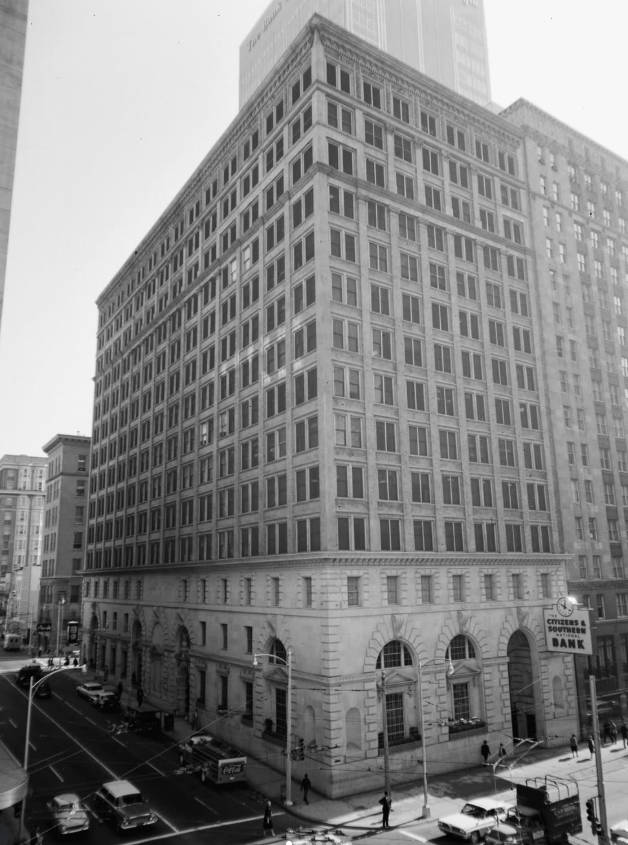
Located at 35 Broad Street in downtown Atlanta, the Empire Building is a defining example of historic architecture in Atlanta and an important piece of the city’s early skyline. Positioned at the intersection of Broad and Marietta Streets, the building sits within one of the oldest commercial corridors in the city, making it a key site for understanding Atlanta urban history, downtown development, and the evolution of commercial architecture in the Southeast.
Early Development of Atlanta Architecture
One of Atlanta’s First Steel-Framed Skyscrapers
Completed in 1901 and designed by Thomas Henry Morgan, the Empire Building is widely recognized as one of Atlanta’s first steel-frame buildings and among the earliest skyscrapers in the region. At 14 stories, it was briefly the tallest building in Atlanta, symbolizing the city’s transition into a modern economic center.
As a product of early steel-frame construction, the building reflects a pivotal moment in American architectural history, when cities began building upward to accommodate rapid growth, density, and commerce.
Architectural Transformation and Design
Philip Shutze’s Beaux-Arts Redesign
Between 1929 and 1932, renowned architect Philip Trammell Shutze reimagined the lower floors of the Empire Building for Citizens & Southern National Bank. His redesign introduced a refined Beaux-Arts architectural style, featuring grand arched bays, classical ornamentation, and a sense of monumentality rarely seen in Atlanta at the time.
Inside, Shutze created an elaborate, two-story banking hall inspired by Italian Mannerism and the Roman Pantheon. The use of marble, symmetry, and classical proportions conveyed stability and permanence—key values for financial institutions during that era.

A “Layered” Architectural Identity
Today, the Empire Building is often described as a blend—or even a “dialogue”—between two architectural movements:
The Chicago School / Commercial Style of the original steel-frame structure
The Beaux-Arts classicism of Shutze’s lower façade
This combination makes it a standout example of adaptive architectural design, where evolving economic and cultural needs reshape the built environment without erasing its past.
A Historic Piece of Atlanta Architecture
A Key Piece of Atlanta’s Architectural History
The Empire Building is listed on the National Register of Historic Places and remains a significant landmark in Atlanta preservation efforts. Its history reflects major shifts in the city’s identity—from a post-industrial Southern city to a growing commercial and financial hub.
Now associated with Georgia State University and home to a Bank of America branch within its historic lobby, the building continues to serve the public while preserving its architectural legacy.
Its endurance highlights the importance of historic preservation in Atlanta, especially as the city continues to experience rapid growth and redevelopment.

Visual Impact on Downtown Atlanta
A Street-Level Experience of Scale and Detail
For pedestrians and visitors, the Empire Building offers a compelling visual experience in downtown Atlanta. At street level, the Beaux-Arts base creates a sense of grandeur through its arches, symmetry, and material richness. This design invites people to slow down, look closer, and engage with the building as more than just infrastructure.
A Vertical Expression of Growth and Ambition
As the eye moves upward, the building shifts into a more restrained, vertical composition characteristic of early skyscraper design. This contrast between ornate base and simplified upper floors reflects both architectural evolution and the city’s historical push toward modernization.
The result is a building that feels both grounded and aspirational—anchored in tradition while reaching toward the future.
The Empire Building and Atlanta’s Identity
Architecture as a Reflection of a Changing City
The Empire Building is more than a historic structure; it is a physical narrative of Atlanta’s transformation. Its blend of styles, continued use, and prominent location make it a powerful example of how architecture shapes city identity.
For residents, students, and tourists alike, the building offers a tangible connection to the past while remaining part of the city’s present-day rhythm. It stands as a reminder that good design is not static—it evolves, adapts, and continues to inform how people experience place.


Comments